
Is there a general model of ball lightning?
 
 
                                                                                                                                   (István Bencsik, June 2026)


 Abstract
Main point: A Hybrid Aerosol-Yukawa Dust Plasma Model for the Formation and Stability of Ball Lightning
This paper proposes a comprehensive, self-consistent physical model for ball lightning, describing it as a strongly coupled, atmospheric Yukawa dust plasma encapsulated within a polarized aqueous-chemical shell. We hypothesize that ball lightning originates from upward-propagating ground streamers contaminated with soil particulates and ambient moisture. Upon detaching from the ground, the plasma channel undergoes a contraction governed by the combination of a surface-tension-like effect in the dust plasma and liquid cohesion. Internal viscosity and enhanced surface tension suppress the Rayleigh-Plateau instability, forming a single, stable macroscopic sphere instead of fragmenting into multiple droplets.
A critical challenge in pure dust plasma models is that the theoretical surface tension coefficient (σ = 10⁻⁴ - 10⁻² J/m²) is insufficient to withstand the internal thermal and electrostatic expansion pressures dictated by the modified Laplace equation (Δ P = 2σ/R). To resolve this paradox, we introduce a hybrid phase mechanism: the strong localized electric field of the plasma polarizes surrounding water molecules, generating a resilient, condensed-phase aqueous shell. The mutual reinforcement of molecular water cohesion and dipole-dipole attraction provides the necessary macroscopic surface tension to balance the internal pressures.
Furthermore, the characteristically long lifetime and the steady-state plateau of the cooling curve are explained by a dynamic equilibrium. The system acts as a self-regulating thermostat, where the radiation and thermal losses are continuously compensated for by the slow, diffusion-controlled oxidation of the embedded dust particles (such as silicon, iron, and calcium). Finally, the model accounts for the two distinct termination modes: a silent decay occurs as chemical fuel depletes and atmospheric pressure collapses the structure, whereas a loud explosion is triggered by grounding, which neutralizes the polarization and instantly shatters the cohesive shell. This framework successfully reconciles the observed optical, structural, and behavioral paradoxes of ball lightning without internal contradictions.

Keywords: ball lightning, streamer discharge, silicon-vapor theory, Yukawa dust plasma, surface tension, plasma liquid, aerosol-plasma hybrid.


Introduction
The questions to be answered: the material of ball lightning, its origin, the reason for the spherical shape, its stability, and its termination. If we manage to find plausible, non-contradictory answers to the questions, then we will arrive at an acceptable model.
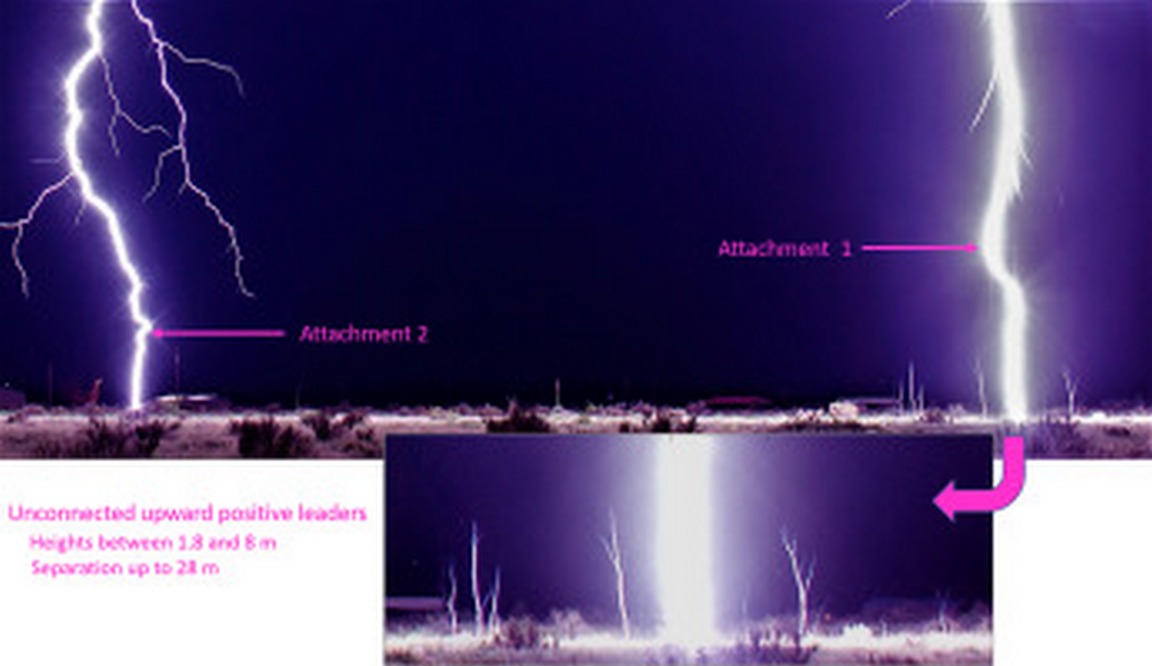
The material of ball lightning is air-plasma, its origin is related to lightning, and there is an observation that they were created "out of nothing", that is, the ball can appear without any preceding phenomenon. One type of pre-lightning, starting from the earth's surface is the non invisible streamer. Streamers are a few mm in diameter, a few meters - some 10 meters long, and are usually positively charged air-originated plasma filaments. They are with few Amperes, their current rarely reaches 100 Amperes.
 
 
streamer nagyítás

                                   Figure 1. Branching, surface, multi-meter-long streamers

                        (https://www.sciencedirect.com/science/article/abs/pii/S016980951730652X


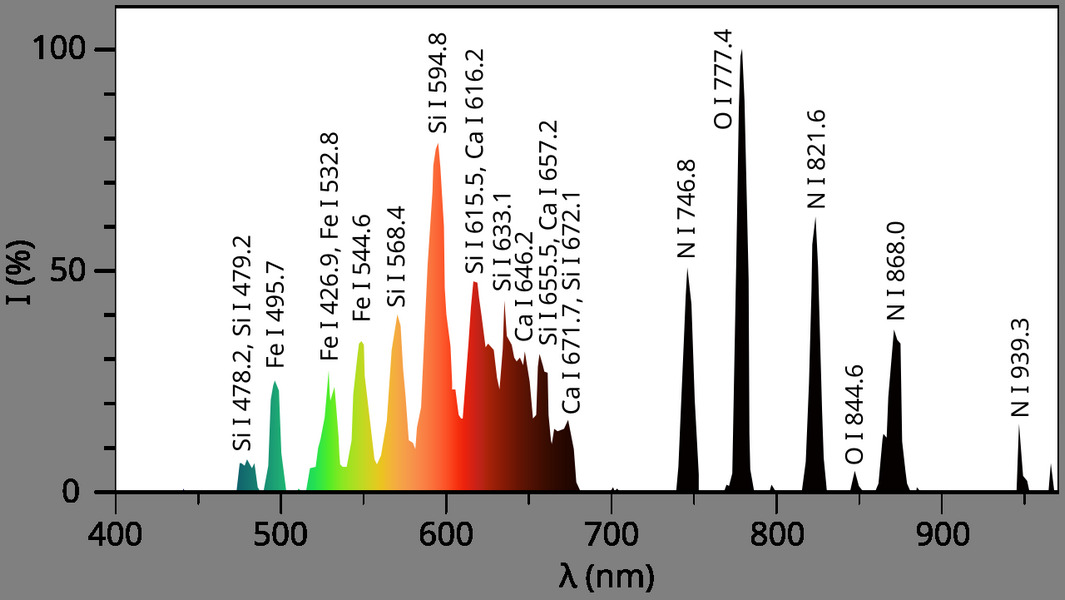
There is an observed ball lightning spectrum that supports the presence of pollutants: a Chinese research team managed to observe a natural ball lightning with a spectrometer in 2012 and found silicon, iron and calcium in its spectrum [1]. Based on the analysis of the data from the 2012 Chinese research, the outer layer of the ball and the burning soil particles (silicon, iron, calcium) inside could only be around 2400 and 4300 degrees Celsius on average. Common "pollutants" in the air are water vapor and carbon compounds, which the Chinese researchers did not measure.
 

Ball1

                                                  Figure 2. Spectra of a ball lightning
                                          (https://en.wikipedia.org/wiki/Ball_lightning)


Origin of ball lightning: surface lightning flashes, invisible streamers
Ordinary lightning flashes are high-current ion channels formed when two types of - invisible - lightning flashes meet, which break through several times when they discharge with a strong light phenomenon. First, the lower lightning flashes, or streamers, starting from the ground surface, appear. The reason for the formation of streamers is the electrical division between the surface and the clouds, or a previous ordinary, linear lightning flash.
When one of the many streamers meets an upper lightning flash (leader), an ion channel is formed, and within it the multiple discharge, the lightning, is formed. The upper leaders are high-energy electron avalanche plasmas, while the streamers are usually positively charged and have an energy one or two orders of magnitude lower, 40-50 meter plasma filaments. Their diameter is 1-2 millimeters. A whole "brush-like" beam (streamer burst) of lightning usually starts from the tops of terrestrial objects, as shown in Figure 1.
While the temperature of traditional, line lightning can reach 30,000 degrees Celsius in a fraction of a second, the internal energy of ball lightning is much lower, they also show lower temperatures, according to literature data they can be a few 100 Kelvin, and their charge is a few nC -μC, surprisingly small.
The current strength and charge of the leaders seem too high compared to ball lightning, so the first part of the hypothesis arises: strong, ground-based and polluted streamers may be the cause of ball lightning. Streamers are lightning precursors with a lower ion temperature than leaders, their charge is usually a few μC. Although the charge is small, the space charge accumulating at the tip of the streamer is locally very large, about It creates an electric field strength of 30 kV/cm or more, which is sufficient for self-sustaining propagation of the lower channel. The energy of individual free electrons accelerated at the tip of the streamer reaches 10–100 keV, which is sufficient for ionization of air molecules and maintenance of a continuous photoionization avalanche.
Streamers have elastic plasma properties and can assume the form of drops with minimal energy, due to their properties similar to the surface tension of Yukawa plasma. Streamers with a sufficiently large volume and dust content can break away from the earth's surface due to surface tension. When the streamer breaks away from the earth's surface, the longitudinal current ceases, and the magnetic effects disappear. The plasma filament contaminated with metal powder breaks up into droplets, sometimes only into one drop, under the influence of surface tension, based on the principle of Rayleigh–Plateau instability. The surface cohesion due to the strong coupling of the plasma fluid then forms the filament into a stable macroscopic sphere, striving for an energy minimum.
 
The surface tension of the Yukawa dust plasma ensures the spherical shape and stability of ball lightning
In plasma physics, the origin of the name Yukawa dust plasmas is that the space of positive dust particles is shielded by electrons, and an exponential multiplier appears in the potential function, the Yukawa potential [2].
The Yukawa potential: the charge of the dust particles is large, 104 - 104 electrons: free electrons and ions shield the particles, the potential is proportional to a factor exp (-r/λD), where λD is the Debye length, r is the distance. To characterize contaminated plasmas, in addition to the Debye length λD, a dimensionless constant denoted Γ is used, which is the ratio of the potential energy between neighboring particles to the thermal kinetic energy.
Another characteristic is the shielding parameter κ (kappa), which is the ratio of the particle distance denoted a to the shielding length λD, i.e. κ = a/λD. If κ = 0, then we get the pure Coulomb plasma, if κ = ∞, then the system behaves like a solid sphere. Depending on the value of the coupling parameter Γ, Yukawa plasmas assume different states of matter: the state is gaseous, if Γ is much smaller than unity, the coupling is weak, and thermal motion dominates.
In the liquid-like state, if Γ > 1, the coupling is strong, and local order is present. At Γ > 170, Wigner crystals appear and the plasma solidifies. Ball lightning is a strongly coupled Yukawa dust plasma with a coupling parameter of about 50-100, which characterizes liquid-like plasmas.
Unlike classical liquids (e.g. water), dust plasmas do not have attractive forces. Surface tension in plasmas is created by the balance between atmospheric pressure and internal electrostatic pressure. Particles at the edge of the dust cloud are repelled by fewer neighboring particles than those at the interior. The asymmetry results in an inward force that behaves like classical surface tension. If the kinetic temperature increases, the coupling parameter Γ decreases, and the surface tension also decreases. In the case of strong coupling Γ > 1, the dust plasma is able to maintain a distinct, sharp boundary and form spherical or lenticular droplets. One of the observed properties of ball lightning is that it produces surprisingly little heat, because it is a "cold" plasma of a few hundred to a thousand Kelvin, the heating of which is provided by the burning dust.
 
The glow and "heating" of ball lightning is provided by burning dust pollution.
The time function of the cooling of ball lightning is a curve that is elongated with a plateau at the same time. Due to the surface tension and internal chemical energy of the dust plasma, the ball does not simply "cool down", but maintains its temperature until its dust material allows it, and then collapses silently or with a bang. Before that, a dynamic equilibrium state is established, which counteracts the radiation and heat losses released to the environment. If an external disturbance (such as air current or pressure change) throws the ball lightning out of this state, the system will adjust itself back to the stable range, protecting the ball from immediate disintegration.
 
According to our model, ball lightning originates from a dust-contaminated streamer that breaks away from the surface and contracts after breaking away. During the process, the plasma filament transforms into a sphere, forming a liquid-like plasma drop. The spherical shape of the structure is provided by a phenomenon similar to surface tension in the strongly coupled Yukawa dust plasma created by the balance of atmospheric pressure and internal electrostatic pressure. The slow oxidation of the dust particles is responsible for their long lifetime and color. The model consistently explains the observed physical properties, such as spherical shape, low density, color, buoyancy, and moderate surface temperature.
For the coupling parameter to reach a liquid-like state (Γ between 50 -100), fine dust and high dust concentration are required. During the formation of the ball, when the plasma streamer breaks away from the ground and contracts into a ball, instabilities (e.g. Rayleigh-Taylor or Plateau-Rayleigh instability) occur. The question is whether the intrinsic viscosity and surface tension of the dust plasma are large enough to prevent the streamer from disintegrating into several smaller droplets and create a single stable ball, which is sufficient according to observations.
 
In the case of large (R > 5-10 cm) spheres, is the "surface tension" of the Yukawa dust plasma insufficient to hold the sphere together?
In thermal dust plasmas, the surface tension coefficient (σ) measured in experiments is negligible, only on the order of 10-4 - 10-2 J/m2, compared to the surface tension of water at room temperature (about 0.073 J/m2). The internal pressure of a luminous, high-temperature plasma sphere and the electrostatic repulsion between the charges overcome the weak surface cohesion force of the dust plasma. If, in addition to the surface tension caused by dust contamination, there is also a polarization shell due to water vapor contamination: the two phenomena - the polarized water bubble (or water dust particles) and the plasma's own surface tension - together are sufficient to ensure the stability of large spheres.
The two effects together in aqueous Yukawa plasma: if the particles of the Yukawa powder plasma are water-based, then two completely different surface tensions of a different nature operate simultaneously in the system: the water's own surface tension (molecular level), which is a real cohesive force maintained by the hydrogen bonds between the water molecules and the polarized structure, which tries to hold the powder particle together and form it into a spherical shape. The electric field of the plasma is able to polarize the water molecules, a local, dipole-based attractive force is formed between the powder particles. The attraction due to polarization is stronger than the Debye-shielded repulsion, and the surface tension of the plasma, together with the cohesion of the water molecules due to polarization, is able to hold the system together.
The basic equation of pressure equilibrium is the Laplace pressure. In order for the ball not to explode or collapse, the resultant of the inward and outward pressures at the boundary layer must be zero. The macroscopic equilibrium is described by a modified version of the Laplace equation known from mechanics: ΔP = 2σ/R, where ΔP is the tension pressure inside the ball lightning, σ is the surface tension of the ball lightning shell, and R is the radius of the ball lightning. The surface tension required to hold the ball together is high, orders of magnitude higher than that of pure water. In the case of an average ball lightning with a diameter of 10 cm (radius of 5 cm), the required value is: if the hot plasma inside the ball lightning exerts only a very minimal overpressure of only 100 Pascals compared to the outside atmosphere (this is barely 0.1% of normal air pressure), based on Laplace's equation, the required surface tension is 2.5 J/m2
Several factors cause expansion inside the sphere, thermal pressure: the core of the ball lightning is hot, the thermal motion of ions and electrons stretches the wall, and radiation pressure: photons of electromagnetic radiation (light or microwaves) enclosed inside the sphere continuously bombard the inner filament. This is counteracted by electrostatic (Coulomb) repulsion: if the core consists of Yukawa particles of the same charge, plasma fluid, the particles repel each other, which generates electrostatic pressure.
Cohesion of the polarized water shell (nanodroplets): ball lightning is an aerosol-plasma hybrid (with water dust particles in its core), the strong local electric field of the plasma polarizes the water molecules. The dipole attraction of the polarized molecules, combined with the inherently high surface tension of water, creates a strong, material "crust" (condensed phase). The crustal shells mechanically resist the pressure of the internal plasma.
The pressure balance is not static, but dynamic, i.e. it requires a continuous supply of energy (from internal chemical combustion, oxidation). When this balance is upset, ball lightning ceases in two ways.
Silent death: if the internal energy (temperature) slowly decreases, the internal pressure drops, and the external air pressure or surface tension slowly, silently collapses/erodes the sphere.
Explosion: if the surface tension of the shell is damaged (for example, the sphere hits a metal object, which drains the charge and eliminates the polarization), the internal expansion pressure immediately, in a single moment, blows the structure apart - this causes the typical, loud explosion.
References
[1] Cen, J., Yuan, P., & Xue, S. (2014). Observation of the optical and spectral characteristics of ball lightning. Physical Review Letters, 112(3), Article 035001. https://doi.org/10.1103/PhysRevLett.112.035001
Cen, Jianyong; Yuan, Ping; Xue, Simin (2014. January 17.). “Observations of optical and spectral characteristics of ball lightning”. Physical Review Letters .112(3) 035001.Bibcode:2014PhRvL.112c5001C.doi:10.1103/PhysRevLett.112.035001.PMID24484145
[2]  Piel, A. (2017). Plasma Physics: An Introduction to Laboratory, Space, and Fusion Plasmas (2nd ed.)Springer International Publishing. DOI: 10.1007/978-3-319-63427-2. [1]
[3] https://pubmed.ncbi.nlm.nih.gov/10676954/, John Abrahamson & James Dinniss: Ball lightning caused by oxidation of nanoparticle networks from normal lightning strikes on soil.Nature, Volume 403, Issue 6769, pages 519–521., 2000. February 3.