
The Formation of Ball Lightning
(István, Bencsik, May 2026)
Abstract We propose a new model for the generation of ball lightning, describing the phenomenon as originating within ground-independent streamer channels that may contain ambient impurities, such as silica dust. Streamer lightning flashes are usually weak, containing little energy to create a ball lightning, but very rarely strong streamers are formed. Ambient dust particles entering a highly coupled, dusty plasma (Yukawa plasma) state—combined with the resulting surface tension—provide the structural stability and spherical geometry of the system at temperatures between 1000–1700 K. According to the model, ball lightning forms when the upper stepped leader associated with the lightning channel decays, isolating and autonomizing the streamer channel. The resulting ball lightning is characterized by macroscopic equilibrium: it is globally electrically neutral, while its inner core consists of ions at 1000–1700 K, and atmospheric pressure. This stability is sustained by the presence of microscopic aerosol impurities from the environment (silicon and other metallic particles in natural habitats; metal dust, soot, or textile fibers in confined spaces like aircraft). Dust particles entering the plasma acquire a high electric charge. As the metallic vapor cools, the system transitions into a strongly coupled, dusty plasma (Yukawa plasma) state, where particles organize into a quasi-crystalline or liquid-like structure. Due to the Yukawa potential, a surface tension akin to classical liquids emerges, acting as a cohesive force against Coulomb repulsion and ensuring the spherical geometry. At temperatures of several thousand Kelvin, this surface tension becomes insufficient to suppress hydrodynamic instabilities, leading to the explosive disintegration of the structure.
Introduction
Ordinary lightning is a natural electrical discharge that neutralizes accumulated electrical charges within clouds. The simplest theory for the origin of ball lightning suggests that it forms similarly to ordinary lightning. The formation of ordinary lightning can be broken down into four main steps: Charge separation, cloud polarization: Thunderstorm clouds (Cumulonimbus) contain strong upward air currents. Water droplets, hailstones, and snowflakes collide within the cloud. Due to these collisions, hailstones acquire a negative charge, while smaller ice particles gain a positive charge. The light, positively charged particles rise to the top of the cloud. The heavy, negatively charged particles gather at the bottom of the cloud. At the bottom the large negative charge at the bottom of the cloud repels the negative charges on the Earth's surface, causing the ground beneath the thunderstorm cloud to become strongly positively charged. These positive charges accumulate on elevated points such as trees, buildings, and mountain peaks (see corona discharges). Leader: When the voltage reaches a critical level, an invisible flow of electrons initiates from the cloud. This is a stepped leader, a pre-discharge that moves toward the Earth in intermittent, zigzag stages. Simultaneously, positive charges begin to move upward from the ground (upward streamer, or ion avalanches during corona discharge, which cause collisional ionization and light phenomena). In every type of lightning and electrical gas discharge, the movement of electrons forms the streamers and pre-discharge channels. The difference lies in the direction of electron flow and the propagation mechanism. The mass of positive ions (ionized nitrogen and oxygen molecules) in the air is tens of thousands of times greater than that of an electron, and because they are too heavy, they barely move under the sudden electric field strength compared to the highly mobile electrons. The microscopic physics of lightning is thus dominated by these mobile and light electrons. Main Stroke (Discharge): When the downward leader and the upward streamer meet, the electrical circuit closes. The lightning flash observed from top to bottom is actually an electrical arc rushing from the ground toward the cloud. This process can repeat multiple times within the very same channel in a fraction of a second. During this process, electrons from the cloud flow toward the ground through the already established channel. The air inside the lightning channel heats up to approximately 30,000 degrees Celsius, forcing the air to expand explosively, which creates a shock wave known as thunder.
The Metal Vapor Theory of Ball Lightning Formation (The Most Widely Accepted Model)
When a conventional lightning bolt strikes the ground, the high temperature triggers chemical reactions. The lightning vaporizes the silicon dioxide (sand, rocks) present in the soil. Upon entering the air, this soil-derived silicon vapor cools down and forms a cloud of tiny, charged particles (an aerosol). This floating cloud reacts with the oxygen in the air (oxidizes/burns), resulting in a continuous, bright glow. This plasma, contaminated with metal vapor, floats in the air. In 2012, a Chinese research team successfully observed a natural ball lightning event using a spectrometer, and its spectrum precisely contained silicon, iron, and calcium (Cen, J., Yuan, P., & Xue, S. (2014). Observation of the optical and spectral characteristics of ball lightning. Physical Review Letters, 112(3), Article 035001. https://doi.org/10.1103/PhysRevLett.112.035001 [1, 2]).
New Theory of Ball Lightning Formation: "Streamer Channel with Surface Tension"
-
Sometimes, a streamer channel becomes independent of the ground surface, and a ball lightning forms—provided that its corresponding upper leader dies out, meaning the channel fails to meet its leader. Ball lightning is characterized by a state of atmospheric plasma that is externally electrically neutral. It is defined by ions at 1000–1700 Kelvin, a non-thermal equilibrium state, and atmospheric pressure.In dusty, contaminated plasmas—when microscopic dust particles (e.g., Si) enter the plasma—the particles absorb a large amount of charge. Upon cooling, they are capable of arranging into a near-crystal structure or behaving like a liquid, while the vapor cools to form a cloud of tiny silicon aerosol particles. A cohesive force, similar to classical surface tension, emerges within this Yukawa plasma due to a high coupling parameter*. An electrical double layer (a thin cloud of oppositely charged ions on the outside) shields the highly charged dusty plasma core on the inside.Particle formation process: At the temperature of a conventional lightning channel, silicon dioxide from the soil dissociates into atoms and vaporizes. As the detached streamer channel begins to cool down and drops below 1700 Kelvin, the silicon vapor becomes supersaturated. The vapor molecules gather around tiny nuclei, forming a 0.1–2 μm aerosol cloud (smoke) within nanoseconds, which becomes ionized and charged due to the surrounding hot electrons.The internal pressure balances out with the surface tension and atmospheric pressure; its specific gravity matches the density of air, allowing it to float. A sphere at atmospheric pressure forms with a temperature around 1000–1700 Kelvin, expanding until it matches the pressure of its surroundings. At temperatures of several thousand Kelvin, the surface tension derived from the Yukawa potential is too weak for stability, causing it to explode. The size of the ball lightning is a function of the Debye length.Contaminations necessary for ball lightning formation—such as metal particles (aluminum, copper from wiring), carbon-based soot, textile fibers, or aerosols—can also be found in enclosed spaces like airplanes, meaning they do not strictly have to be silicon-based.
-
Ball lightning shines without radiating intense heat, because it is a so-called non-thermal (cold) plasma phenomenon, the luminescence of excited atoms, where the energy of the particles is not converted into heat that warms the environment, but almost entirely into opaque light. Heavy ions and neutral atoms, on the other hand, remain slow, their temperature falling close to that of the surrounding air. Since the thermal radiation and warmth are caused by the movement of heavy particles, the ball does not feel hot from the outside.
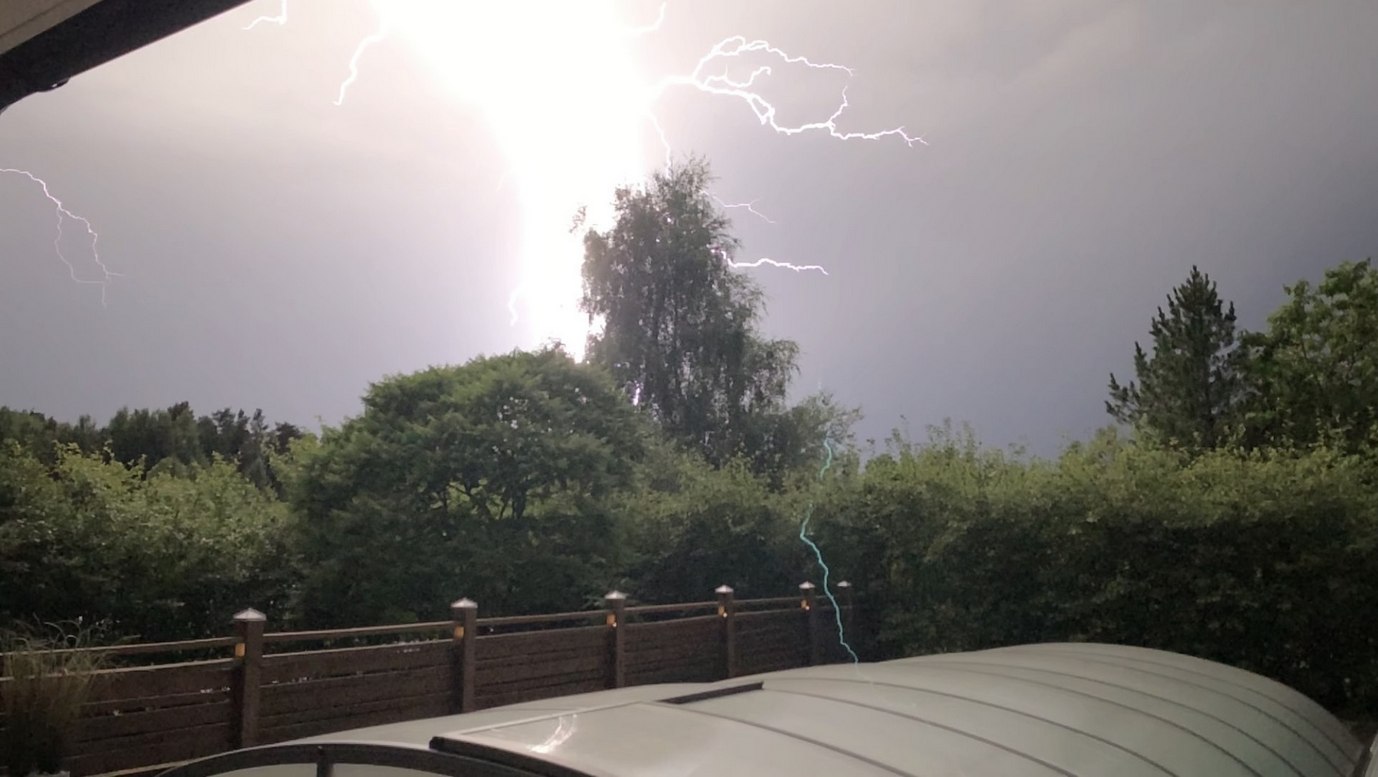
Upwards streamer emanating from the top of a pool cover (https://vi.wikipedia.org/wiki/T%E1%BA%ADp_tin:Upwards_streamer_from_pool_cover.jpg)
)
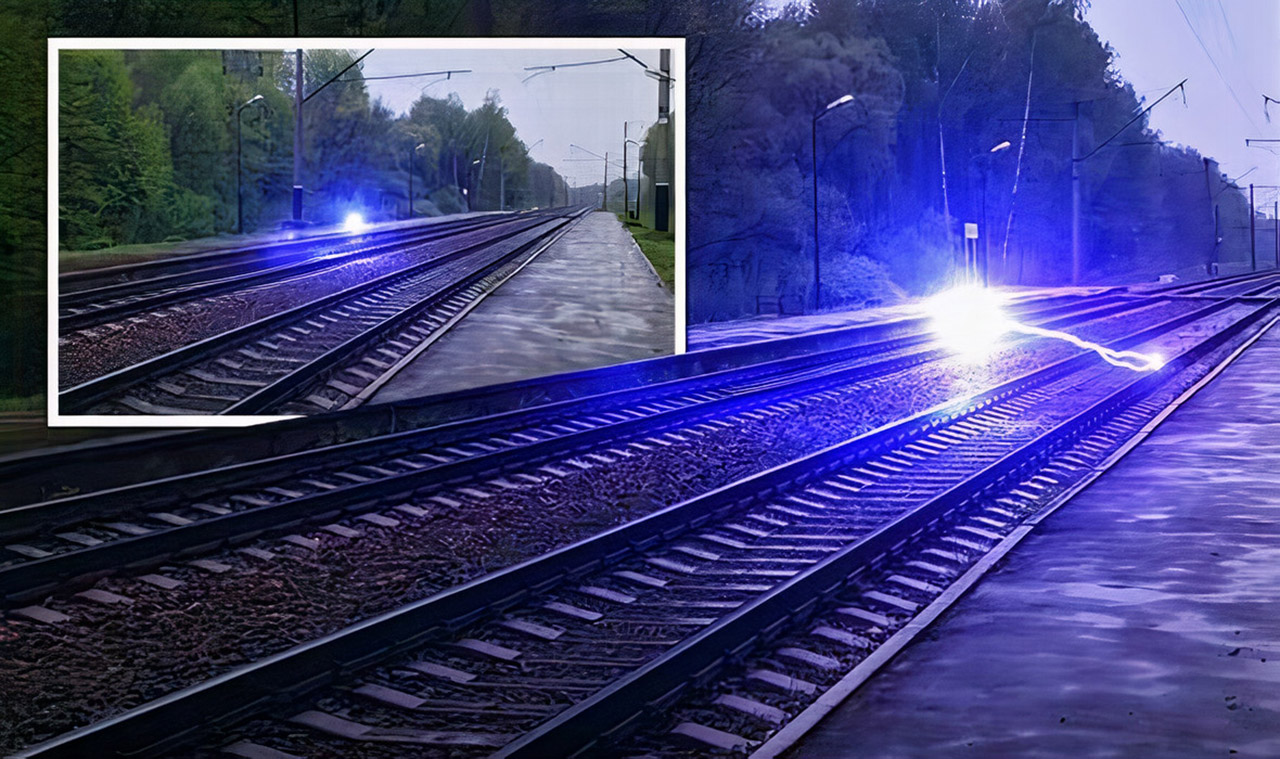
Ball Lightning (Detailed and original discussion in Hungarian: https://bencsik.rs3.hu/component/content/category/976-a-goembvillam-keletkezese.html?Itemid=101)
Proposed Laboratory Experiment: Investigating Yukawa Condensation in Isolated Streamer Channels
Objective: To demonstrate that an isolated plasma streamer channel enriched with metal/silicon aerosols undergoes Yukawa condensation during the cooling phase, collapsing into a spherical geometry due to surface tension.
Experimental Setup & Methodology
1. Aerosol Generation
Action: Inject micrometer-sized silicon dioxide, aluminum oxide, or iron oxide powders into a sealed acrylic or quartz glass chamber.
Result: Creation of a fine dust suspension (mist/colloidal aerosol).
2. Streamer Initiation
Electrode Configuration: Dual-electrode setup with a 5 cm gap.
Excitation Source: Pulsed Dielectric Barrier Discharge (pulsed-DBD).
Voltage Pulse: High-voltage pulse between 75 kV and 100 kV to ensure reliable streamer initiation.
Pulse Dynamics: Nanosecond pulse duration with a rise time of \(\approx 10\text{ ns}\).
Current: Peak current between 10 A and 100 A.
Energy Limitation: Discharge energy is constrained using a high-voltage capacitor C = 100 pF - 1 nF. Peak discharge energy must not exceed 1–5 J per pulse.
3. Streamer Isolation (Quenching)
Action: Utilize a fast electronic switch to truncate the voltage pulse before the streamer reaches the counter-electrode, simulating a decaying leader tip.
Pulse Width: 50–200 ns.
Turn-off Time (Cut-off speed): Less than 20 ns.
4. Cooling Phase & Diagnostics
Action: Abrupt interruption of the plasma channel current triggers the thermal relaxation (cooling) phase.
Key Measurable Parameters and Diagnostics
High-Speed Imaging: Utilizing a high-speed camera operating at 10,000+ fps to record whether the disintegrating channel fragments exhibit spherical contraction (a definitive sign of surface tension in the dusty plasma).
Laser Scattering Imaging (Mie Scattering): Illuminating the chamber volume with a laser sheet to visualize dust particle distribution. If the model is correct, the aerosol particles will self-organize and concentrate into a well-defined spherical shell or core (Yukawa crystallization).
Optical Emission Spectroscopy (OES): Measuring the time-resolved emission spectrum of the glowing matter during the cooling phase to verify the predicted thermal range of 1000 K to 1700 K.