
The problem with the metal powder plasma model is that the theoretical surface tension coefficient (σ = 10⁻⁴ - 10⁻² J/m²) is just sufficient to balance the internal thermal and electrostatic expansion pressure described by the modified Laplace equation (Δ P = 2σ/R). (Polymer and nano-scaffolds are assumed in the literature.) The surface tension of the Yukawa dust plasma (strongly coupled complex plasma) is sufficient to ensure the internal cohesion and stability of typical ball lightnings with a diameter of a few centimeters to a few tens of centimeters. Carbon contamination can raise the local field strength to higher levels than metal contaminations, to 1010 V/m or more, which guarantees the immediate, complete dielectric, polarization saturation of water molecules in direct contact with the carbon.
The characteristically long lifetime of ball lightning and the constant section of the cooling curve are explained by the combustion of carbon and metal contaminations. The system is self-regulating, and radiation and heat losses are continuously compensated by the slow, diffusion-controlled oxidation of embedded dust particles (e.g. silicon, iron, carbon compounds and calcium).
Mixed contamination is a natural assumption in the case of soil contamination. The ball lightning structure that corresponds to the observations is given by the mixed dust composition. The carbon particles provide both the internal energy production (fuel) and the polarized operation of the interface, while the silicate ions from the soil and the calcium ions dissolve in the water shell, creating a viscous gel network, which results in the elasticity of the ball.
The general model also accounts for two types of termination modes: the silent death occurs when the chemical fuel is exhausted and the atmospheric pressure collapses the structure, while the loud explosion is triggered by grounding, which neutralizes the polarization and immediately disperses the cohesive shell. The model explains the observed optical, structural and behavioral paradoxes of ball lightning without contradictions.
The problem with the metal powder plasma model is that the theoretical surface tension coefficient (σ = 10⁻⁴ - 10⁻² J/m²) is barely sufficient to balance the internal thermal and electrostatic expansion pressure described by the modified Laplace equation (Δ P = 2σ/R). (Polymer and nano-scaffolds are assumed in the literature.) The surface tension of the Yukawa dust plasma (strongly coupled complex plasma) is sufficient to ensure the internal cohesion and stability of typical ball lightnings with a diameter of a few centimeters to a few tens of centimeters. Carbon contamination can raise the local field strength to higher levels than metal contaminations, to 1010 V/m or more, which guarantees the immediate, complete dielectric, polarization saturation of water molecules in direct contact with the carbon.
The characteristically long lifetime of ball lightning and the constant section of the cooling curve are explained by the combustion of carbon and metal contaminations. The system is self-regulating, and radiation and heat losses are continuously compensated by the slow, diffusion-controlled oxidation of embedded dust particles (e.g. silicon, iron, carbon compounds and calcium).
Mixed contamination is a natural assumption in the case of soil contamination. The ball lightning structure that corresponds to the observations is given by the mixed dust composition. The carbon particles provide both the internal energy production (fuel) and the polarized operation of the interface, while the silicate ions from the soil and the calcium ions dissolve in the water shell, creating a viscous gel network, which results in the elasticity of the ball.
The general model also accounts for two types of termination modes: the silent death occurs when the chemical fuel is exhausted and the atmospheric pressure collapses the structure, while the loud explosion is triggered by grounding, which neutralizes the polarization and immediately disperses the cohesive shell. The model explains the observed optical, structural and behavioral paradoxes of ball lightning without contradictions, its origin is related to lightning, and there is an observation that they were created "out of nothing", that is, the ball can appear without any preceding phenomenon. One type of pre-lightning, starting from the earth's surface is the non invisible streamer. Streamers are a few mm in diameter, a few meters - some 10 meters long, and are usually positively charged air-originated plasma filaments. They are with few Amperes, their current rarely reaches 100 Amperes.
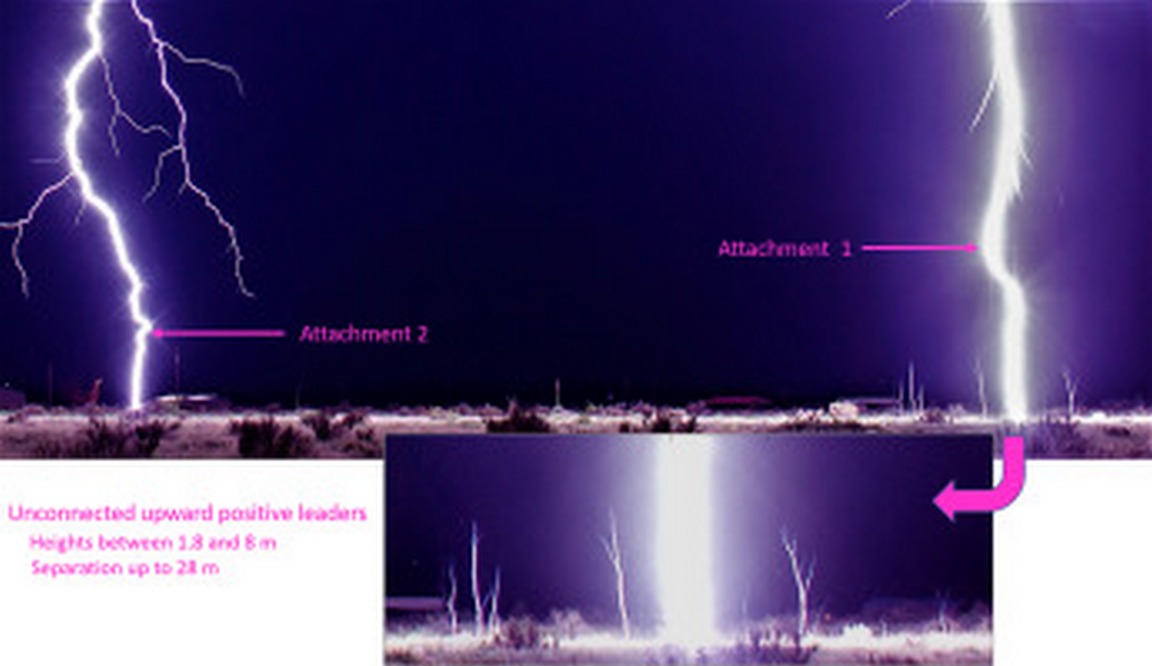
Figure 1. Branching, surface, multi-meter-long streamers
(https://www.sciencedirect.com/science/article/abs/pii/S016980951730652X)
There is an observed ball lightning spectrum that supports the presence of pollutants: a Chinese research team managed to observe a natural ball lightning with a spectrometer in 2012 and found silicon, iron and calcium in its spectrum [1]. Based on the analysis of the data from the 2012 Chinese research, the outer layer of the ball and the burning soil particles (silicon, iron, calcium) inside could only be around 2400 and 4300 degrees Celsius on average. Common "pollutants" in the air are water vapor and carbon compounds, which the Chinese researchers did not measure.
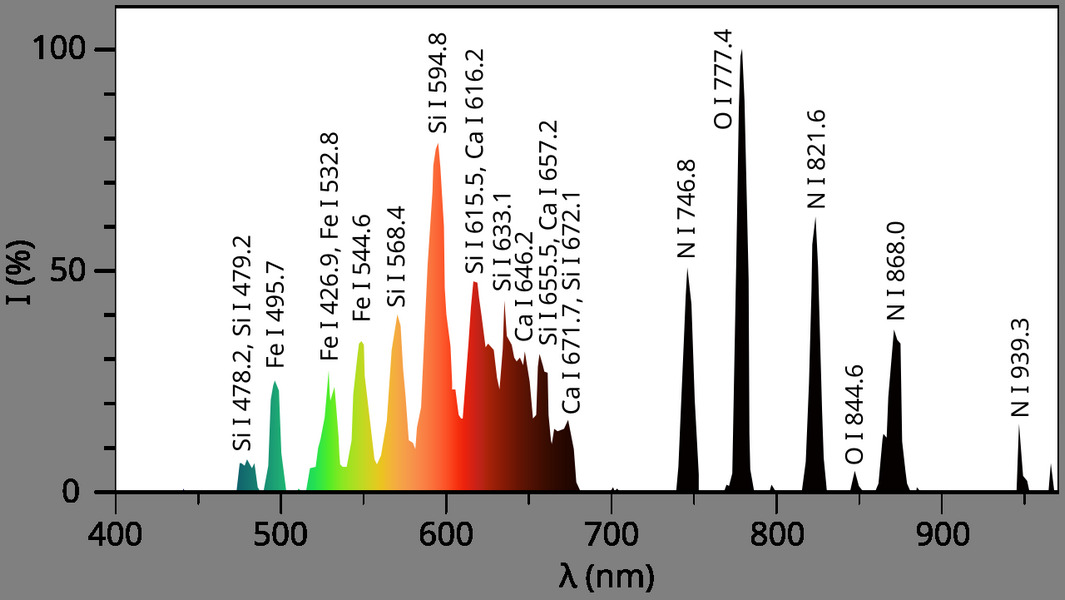
Figure 2. Spectra of a ball lightning
(https://en.wikipedia.org/wiki/Ball_lightning)